
"18 years"
7000 article(s) found

A brief introduction to the description of the flavor and aroma characteristics of Columbia's exquisite coffee beans
The annual rainfall is 2000 to 3000 mm, latitude 1-11 15 north and longitude 72-78 west. The specific range of elevation is more than 2.000 meters. By a special combination of various factors, the latitude, altitude, soil, plant origin of species and varieties of coffee in the coffee growing area of Colombia, the rain pattern produced by the climate and tropical convergence of the coffee growing area, in one.
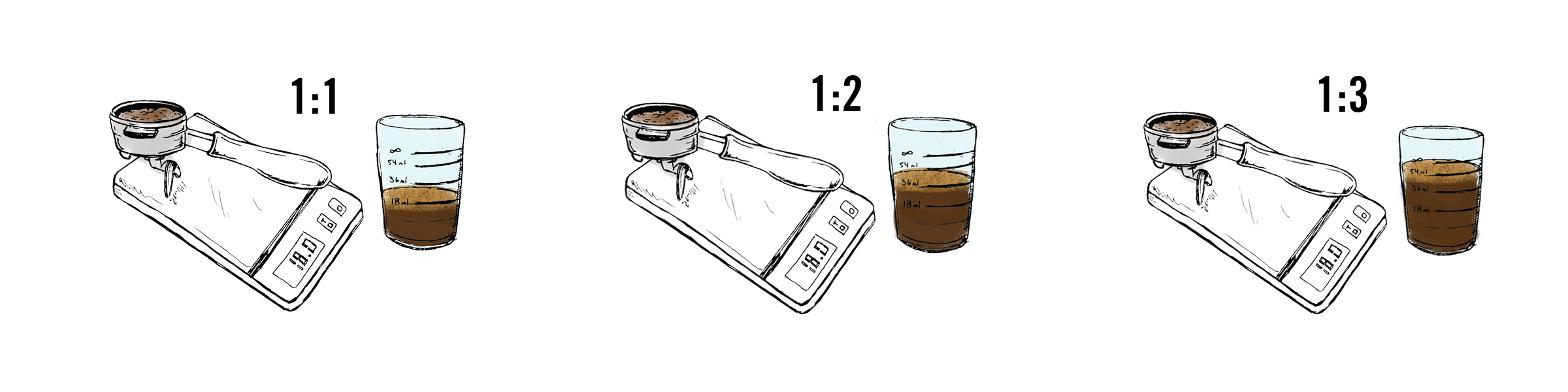
Espresso Coffee Different powder/water ratios produce different flavors Espresso Coffee
Espresso coffee has different powder-water ratios. It is very simple to make espresso coffee, but in the process, it is necessary to control the various proportions and balances between the elements in order to pursue the best taste and the most perfect taste. However, mastering these ratios requires a long time of exploration and contact, and the most critical one is the proportion of gouache. The proportion of ground coffee to the total weight of coffee.

A brief introduction to the description of the flavor and aroma characteristics of Columbia's exquisite coffee beans with high balance.
No matter in terms of yield or texture, Colombian coffee is first produced by Medellin, which is characterized by full granules, rich nutrition, moderate acidity, good balance, rich aroma and soft taste. In addition to Medellin, the provincial capitals of two neighboring provinces in the south, Armenia and Manizales, are also famous coffee producers.

Home-baked boutique coffee (7) Guatemala
As the second most populous country in Central America after Mexico, Guatemala also ranks second in coffee production in China and the United States. Although it has been affected by political unrest for many years, the country once famous for Antigua tobacco coffee has no shortage of high-quality boutique coffee. More than half of the land of less than 110000 square kilometers is rich in coffee, coffee, sugar and bananas.

Brazilian South Minas Coffee introduces Minas as synonymous with Brazilian boutique coffee.
Professional barista exchanges please pay attention to the origin and development of Brazilian coffee in the coffee workshop (Wechat official account cafe_style) Coffee was first introduced to Brazil in the early 18th century. In 1727, the Brazilian government sent a personable army officer to secretly bring coffee seeds from French Gaiana to Brazil on the grounds of mediating border disputes. It is said that the wife of French Gaiana at that time

A brief introduction to the description of the flavor and flavor characteristics of Columbia's exquisite coffee beans with a long aftertaste
Origin: na Linglong altitude: 1860 m-2220 m processing: washing harvest time: April-June (75%), October-February (25%) varieties: new Kaddura species, Castie baking degree: CITY+ flavor characteristics: roasted almonds, lemon and orange, white chocolate, honey, peach, round body, long aftertaste, balance this is the reason for the excellent quality of Colombian coffee.

A brief introduction to the treatment method of grinding degree and baking degree of Columbia exquisite coffee beans with a long aftertaste
No matter in terms of yield or texture, Colombian coffee is first produced by Medellin, which is characterized by full granules, rich nutrition, moderate acidity, good balance, rich aroma and soft taste. In addition to Medellin, the provincial capitals of two neighboring provinces in the south, Armenia and Manizales, are also famous coffee producers.

Fresh and elegant Santo Domingo boutique coffee bean cultivation geographical location, climate, good altitude
Carefully selected in this way, the high-quality Dominican coffee exudes a faint aroma and gives people a faint fruity aroma with a lingering finish and a smooth and smooth finish. To trace the origin of Tibica, we should first talk about the coffee trees originally planted in Martinique. These trees were planted by Dominicans as far back as the early 18th century, so Dominica began at that time.

Introduction to Colombian Hope Manor Coffee with Sweet in Acid and low bitterness
The suitable climate in Colombia provides a real natural pasture for coffee. Coffee trees in Colombia are mainly cultivated in the Andes, on steep slopes about 1300 meters above sea level, where the annual temperature is about 18 degrees Celsius, annual rainfall is 2000 to 3000 millimeters, latitude 1-11 15 north, longitude 72-78 west, and the specific range of elevation can exceed 2.000 meters. By

A brief introduction to the cultivation of pure and gentle Santo Domingo boutique coffee beans, geographical location, climate and altitude
To trace the origin of Tibica, we should first talk about the coffee trees originally planted in Martinique. These trees were planted by Dominicans as far back as the early 18th century, so Dominica began growing coffee as early as that time. For a time, the Caribbean was almost synonymous with coffee production, but in recent years Cuba, Haiti and other producing areas have been severely damaged by Hurricane George.

Introduction to sour Dominican coffee grown in the highlands
In the early 18th century, coffee was introduced to Domiga from Martinique, and fine coffee was produced in the north represented by Hibao and in the south, including Okayabani Santo Domingo. Among them, the coffee produced by Santo Domingo and Barney, which is almost synonymous with domiga coffee, is a world-famous high-quality coffee. Santo Domingo coffee, which is characterized by freshness and elegance,

Grinding scale of Brazilian Yellow bourbon Coffee beans A brief introduction to the production area of Baking degree
A brief introduction to the Grinding scale of Brazilian Yellow bourbon Coffee beans Coffee was first introduced to Brazil in the early 18th century. In 1727, the Brazilian government sent a personable army officer to secretly bring coffee seeds from French Gaiana to Brazil on the pretext of mediating border disputes. it is said that the wife of French Gaiana was so fascinated by the officer that he saw him off on the evening of farewell.
Talk about Chinese Coffee Market where is the way of Hainan Coffee Industry?
Hainan coffee tourism consumption accounts for 90%. Some data show that the space of China's coffee market will continue to expand and will enter a period of rapid growth in the next 10 years. By 2020, the consumption of Chinese coffee market is expected to reach 300 billion yuan. So, what is the current situation of Hainan's local coffee market? Recently, the reporter investigated and learned that Hainan coffee is very promising. Chengmai and Wanning have issued policies to encourage farmers.

How much is the price of bourbon coffee beans?
Professional coffee knowledge exchange More coffee bean information Please pay attention to coffee workshop (Weixin Official Accounts cafe_style) In the 18th century, Reunion Island (Bourbon Island) once appeared a variety of coffee beans called "Bourbon Tip Body" because of their narrow shape and sharp ends. Although the output is extremely rare, its charming aroma and elegant sweetness make it quickly spread among French princes and nobles.

A brief introduction to the treatment method of grinding degree and baking degree of Santo Domingo boutique coffee beans with winding aftertaste
The earliest coffee in Dominica was introduced from Martinique (the overseas province of France), dating back to the early 18th century. Dominica is an island country with a tropical climate. The temperature changes little throughout the year. Except for the lower temperature in the Central Cordillera Mountains, which can reach less than 0 ℃ in winter, the annual average temperature in other areas is between 2530 ℃, which is affected by the mountain topography.

Rwanda Coffee Flavor description, Grinding degree, Taste characteristics, Price Fine Coffee in producing area
The suitable climate in Colombia provides a real natural pasture for coffee. Coffee trees in Colombia are mainly cultivated in the Andes, on steep slopes about 1300 meters above sea level, where the annual temperature is about 18 degrees Celsius, annual rainfall is 2000 to 3000 millimeters, latitude 1-11 15 north, longitude 72-78 west, and the specific range of elevation can exceed 2.000 meters. By
Kenyan Kenya AA Coffee Kenyan Coffee beans mocha Coffee
This classification method is based on a variety of perforated screen classification, the screen has a variety of specifications, identified by the number, the number is associated with the mesh. The size of the mesh-1 stroke 64 inches is the unit of calculation. If the diameter of the mesh is 18 stroke 64 inches, the number of the screen is 18; if the diameter of the mesh is 17 inch 64 inches, the number of the screen is 17. And so on, there are 19, 16, 15, 1
[coffee culture] different powders for making espresso are better than Italian super-espresso makers.
Today, what I share with friends is the different powder-to-water ratio of espresso made from all over the world. It is very simple to make espresso, but in the process, various proportions and balances of elements need to be controlled to pursue the best taste and perfect taste. However, mastering these proportions takes a long time to explore and connect, and the most important thing is the gouache ratio.

Columbia Linglong Coffee Flavor description treatment with very full odor characteristics of variety production area
The suitable climate in Colombia provides a real natural pasture for coffee. Coffee trees in Colombia are mainly cultivated in the Andes, on steep slopes about 1300 meters above sea level, where the annual temperature is about 18 degrees Celsius, annual rainfall is 2000 to 3000 millimeters, latitude 1-11 15 north, longitude 72-78 west, and the specific range of elevation can exceed 2.000 meters. By

Dominica Santo Domingo Coffee Flavor description Grinding Variety characteristics of Fine Coffee
The earliest coffee in Dominica was introduced from Martinique (the overseas province of France), dating back to the early 18th century. Dominica is an island country with a tropical climate. The temperature changes little throughout the year. Except for the lower temperature in the Central Cordillera Mountains, which can reach less than 0 ℃ in winter, the annual average temperature in other areas is between 25 and 30 ℃, which is affected by the mountain topography.